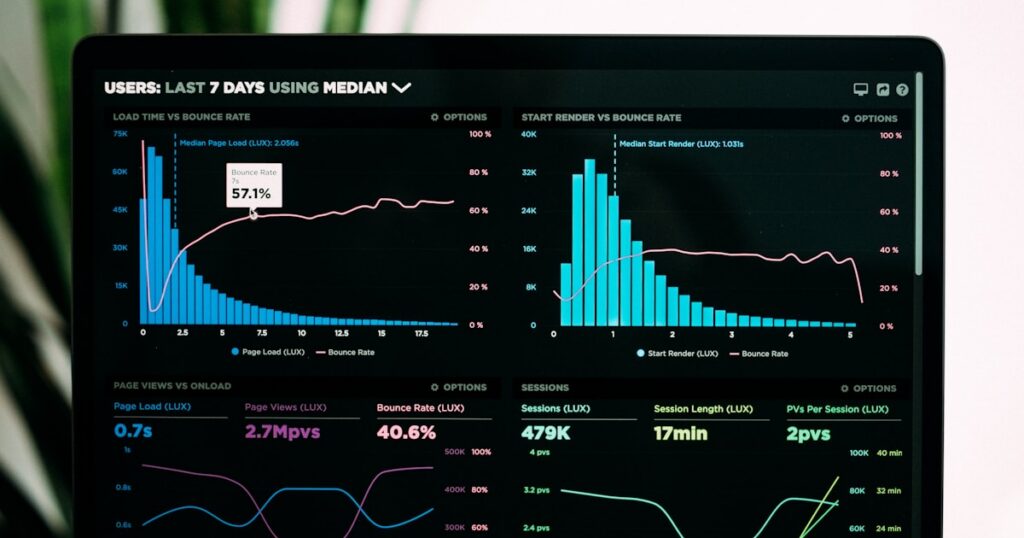
Need a bar chart but don’t want to pay for expensive software? I spent the last two weeks testing every free bar chart maker I could find online. Some were surprisingly good. Others wasted my time with paywalls disguised as “free” tools.
Here’s what actually works in 2026 – no credit card, no hidden fees, no “free trial” nonsense. If you need other chart types too, check out my guide on creating pie charts for free or the full roundup of flowchart and diagram tools.
Quick Comparison Table
| Tool | Best For | Free Limits | Export Formats | Account Required |
|---|---|---|---|---|
| Google Sheets | Data-heavy charts | Unlimited | PNG, PDF, SVG | Yes (Google) |
| Canva | Design-quality charts | Most templates free | PNG, JPG, PDF | Yes |
| Datawrapper | Publication-ready charts | 1 chart at a time, 10K rows | PNG, SVG | Yes |
| Meta-Chart | Quick no-signup charts | Unlimited | PNG, SVG | No |
| RAWGraphs | Custom visualizations | Unlimited, open source | SVG, PNG | No |
| Flourish | Interactive/animated charts | Unlimited public projects | PNG, HTML embed | Yes |
| ChartGo | Simple one-off charts | Unlimited | PNG | No |
| LibreOffice Calc | Offline charting | Unlimited, desktop app | PNG, SVG, PDF | No |
1. Google Sheets – Best Overall Free Option
Look, if you already have a Google account (and who doesn’t), this is probably where you should start. Google Sheets handles bar charts with zero fuss, and you can go from raw data to a finished chart in about 90 seconds.
How to make a bar chart in Google Sheets
Select your data range. Click Insert, then Chart. Sheets usually picks the right chart type automatically, but if it doesn’t, switch to “Bar chart” in the Chart editor panel on the right. That’s it.
The customization options are deeper than you’d expect. You can change colors for individual bars, add data labels, adjust axis ranges, flip between horizontal and vertical bars, and add trendlines. Double-click the chart to open the editor, then explore the Customize tab.
What I liked
- Works with any data size – I tested it with 50,000 rows and it handled everything fine
- Real-time collaboration means your team can edit the same chart simultaneously
- Export as PNG, PDF, or SVG directly from the three-dot menu on the chart
- Automatic updates when your data changes
What could be better
- Charts look a bit plain by default – you’ll need to spend time on formatting
- Limited animation options compared to dedicated tools
- Requires internet connection (offline mode exists but is unreliable for charts)
2. Canva – Best for Good-Looking Charts
Canva’s chart maker surprised me. I expected it to be all style and no substance, but the bar chart tool is genuinely useful. The free plan covers most of what you need.
Go to canva.com, search for “bar chart” in templates, pick one that fits your style, then replace the placeholder data with your own numbers. You can also start from scratch – click Elements, search “chart”, and drag a bar chart onto your canvas.
What makes Canva different is the design context. Your bar chart isn’t floating in a void – you can drop it into a presentation, social media post, infographic, or report. The templates make everything look cohesive without hiring a designer. Speaking of which, here’s my list of free presentation tools if you need the full package.
What I liked
- Templates save a ton of time – found about 40 free bar chart templates
- Color schemes match automatically if you set brand colors
- Drag-and-drop editing is intuitive even for non-designers
- Free PNG and JPG export at decent resolution
What could be better
- Can’t import CSV files directly into charts – manual data entry only
- SVG export requires Canva Pro ($13/month)
- Limited to about 20 data points per chart on the free plan
- Some of the best templates are locked behind Pro
3. Datawrapper – Best for Professional Charts
Datawrapper is what newsrooms like The Washington Post and Reuters use for their charts. The free tier gives you access to the same charting engine, just with some publishing restrictions.
The workflow is clean: paste your data or upload a CSV, pick your chart type, customize colors and labels, then publish or download. Datawrapper automatically formats axis labels, handles large numbers with abbreviations (1M instead of 1,000,000), and picks sensible defaults for just about everything.
I was genuinely impressed by the accessibility features. Charts created in Datawrapper include ARIA labels and are screen-reader friendly out of the box. That matters if you’re publishing charts on a public website.
What I liked
- Output quality is noticeably better than most free tools – clean typography, proper spacing
- Handles up to 10,000 data rows on the free plan
- Responsive charts that resize properly on mobile
- Built-in color blindness checker
What could be better
- Free plan only lets you have 1 chart at a time (you’d need to delete the old one to make a new one)
- Custom fonts require a paid plan ($599/year for teams)
- No offline mode
4. Meta-Chart – Best for Quick No-Signup Charts
Sometimes you just need a bar chart in 30 seconds with zero friction. Meta-Chart does exactly that. No account, no email, no signup wall. Open the site, pick “bar chart”, enter your data, download. Done.
The interface is honestly kind of ugly. It looks like it was designed in 2012 and never updated. But here’s the thing – it works perfectly for generating clean, simple bar charts. The output looks way better than the tool itself.
What I liked
- Zero signup requirement – just go to meta-chart.com and start
- Downloads as PNG or SVG with no watermarks
- Supports grouped bars, stacked bars, and horizontal bars
- Loads fast even on slow connections
What could be better
- No way to save your work – refresh the page and it’s gone
- Limited color options (about 16 preset colors)
- Can’t import data from files – manual entry only
- No interactive or animated charts
5. RAWGraphs – Best Open Source Option
RAWGraphs is an open-source visualization tool built by a team at the Politecnico di Milano. It handles bar charts plus about 30 other chart types, and your data never leaves your browser.
That privacy angle matters. If you’re working with sensitive data – employee salaries, medical stats, financial projections – RAWGraphs processes everything locally. Nothing hits their servers. I verified this by disconnecting my wifi after loading the page, and the tool kept working perfectly.
The learning curve is steeper than Google Sheets or Canva. RAWGraphs expects you to understand concepts like “mapping dimensions” – you drag data columns onto chart properties rather than just clicking a button. Takes maybe 10 minutes to figure out, but once you do, the flexibility is remarkable.
What I liked
- Completely free, no tiers, no paid plans
- Data stays in your browser – good for confidential information
- SVG export means you can edit the chart in Illustrator or Figma later
- Handles unusual chart types that other tools don’t offer
What could be better
- Steeper learning curve than most tools on this list
- No built-in templates – you start from a blank state every time
- Chart styling options are limited compared to Datawrapper
6. Flourish – Best for Interactive Charts
If you need your bar chart to animate, respond to mouse hovers, or tell a data story, Flourish is the tool. The free plan gives you unlimited public projects with full interactivity.
Flourish’s bar chart race template alone is worth checking out. You’ve seen those animated charts on YouTube where bars race against each other over time? That’s a Flourish specialty. Upload your time-series data, pick the “bar chart race” template, and you get a shareable animated visualization in about 5 minutes.
The catch: everything you create on the free plan is public. If you need private charts, the business plan starts at $63/month. For personal projects, blog posts, or presentations where the data isn’t sensitive, the free tier is more than enough.
What I liked
- Interactive charts that respond to hover and click events
- Bar chart race animations are genuinely impressive
- Embed code works on any website
- Clean, modern design defaults
What could be better
- Free plan = public projects only (everyone can see your data)
- PNG export quality is just okay – 2x resolution costs money
- Some templates are confusing to configure without watching tutorials
7. ChartGo – Best for Simple One-Off Charts
ChartGo is the most bare-bones option on this list, and I mean that as a compliment. You get a form, you fill in your labels and values, you click a button, you get a bar chart. No drag-and-drop, no template gallery, no learning curve. If you want the full spreadsheet experience with charts included, there are better options. But for a fast one-off bar chart, ChartGo is hard to beat.
I use ChartGo when I need a chart for a quick email or Slack message and don’t want to open a full application. The whole process takes under a minute.
What I liked
- Fastest path from data to chart on this entire list
- No account needed
- Supports bar, line, pie, and area charts
- Clean output without watermarks
What could be better
- Very limited customization – you get what you get
- Only PNG export
- Can’t handle more than about 30 data points comfortably
- Site has ads (nothing intrusive but worth mentioning)
8. LibreOffice Calc – Best Free Offline Option
Not everything needs to be online. LibreOffice Calc gives you Excel-level charting capabilities in a free, open-source desktop application. Download it from libreoffice.org, install it, and you’ve got a full spreadsheet app with a solid charting engine.
The chart wizard walks you through the process: select data, pick chart type, customize appearance, insert. It supports grouped bars, stacked bars, 3D bars, and percentage bars. You can export charts as PNG, SVG, or PDF – or just copy-paste them into a LibreOffice Writer document or Impress presentation.
Honestly, if you’re coming from Excel, LibreOffice Calc will feel familiar immediately. The keyboard shortcuts are almost identical, and the chart customization dialogs work the same way. For more on tools like this, see my comparison of free Microsoft Office alternatives.
What I liked
- Works completely offline – no internet needed after installation
- No data limits, no chart limits, no restrictions at all
- Handles complex multi-series bar charts well
- Available on Windows, Mac, and Linux
What could be better
- Installation required (about 300 MB download)
- Default chart aesthetics look dated compared to web tools
- No collaboration features
- Chart animations aren’t possible
Which Tool Should You Pick?
After testing all eight, here’s my honest recommendation based on your situation:
For work presentations: Google Sheets if your data is already in a spreadsheet. Datawrapper if you need publication-quality output.
For school projects: Canva. The templates make everything look polished with minimal effort.
For a quick chart in under 60 seconds: Meta-Chart or ChartGo. No signup, no friction.
For sensitive data: RAWGraphs (browser-only processing) or LibreOffice Calc (fully offline).
For interactive web content: Flourish, hands down.
Tips for Better Bar Charts
A few things I’ve learned from making hundreds of bar charts over the years:
Start the Y-axis at zero. Truncating the axis makes small differences look dramatic and misleads your audience. There are rare exceptions, but as a default rule, zero is your baseline.
Sort your bars. Unless there’s a natural order (months, age groups), sort bars from largest to smallest. It makes the chart instantly readable. Most people skip this and leave bars in whatever random order their data came in.
Limit to 12 bars maximum. More than that and the chart becomes a wall of color. If you have 50 categories, show the top 10 and group the rest as “Other”.
Use horizontal bars for long labels. If your category names are more than two words, flip the chart horizontal so the labels are readable without tilting your head.
Pick one accent color. Color every bar the same neutral shade except the one you want to highlight. This draws the eye immediately to the data point that matters.
FAQ
What is the best free bar chart maker online?
Google Sheets is the best overall free bar chart maker for most people. It handles large datasets, offers solid customization, exports in PNG/SVG/PDF, and requires nothing beyond a Google account. For no-signup quick charts, Meta-Chart and ChartGo work well.
Can I create a bar chart without signing up for anything?
Yes. Meta-Chart, ChartGo, and RAWGraphs all let you create and download bar charts without creating an account. RAWGraphs also processes your data entirely in the browser, so nothing leaves your computer.
How do I make a bar chart from Excel data?
Copy your data from Excel and paste it into Google Sheets, Datawrapper, or RAWGraphs. All three accept pasted tabular data. You can also upload a CSV file directly to Datawrapper or RAWGraphs. For offline use, open your Excel file in LibreOffice Calc and use its built-in chart wizard.
Is Google Sheets good enough for professional bar charts?
For internal reports and team presentations, absolutely. For client-facing publications or data journalism, Datawrapper produces cleaner output with better typography and mobile responsiveness. Google Sheets charts are functional but not designed to impress.
What’s the difference between a bar chart and a column chart?
A bar chart uses horizontal bars. A column chart uses vertical bars. That’s the only difference. In practice, most people (and tools) use “bar chart” to mean both orientations. All eight tools in this guide support horizontal and vertical layouts.